
少林足球
Tech exchange drives China-Cambodia industrial cooperation at Phnom Penh machinery show_我的网站

A | 工信部公布2026年上半年数字产业运行情况。上半年,我国数字产业加快发展,总体呈现向优向好发展态势,业务收入保持较快增长,盈利水平大幅改善,出口需求保持旺盛,核心技术加快创新突破,新领域新赛道发展动能增强,为稳定经济增长、培育发展新质生产力、赋能千行百业数智转型提供有力支撑。一、发展质效稳步提升收入稳中有进。数字产业实现收入20.71万亿元,同比增长13.6%,增速同比加快4.1个百分点,环比一季度加快0.7个百分点。
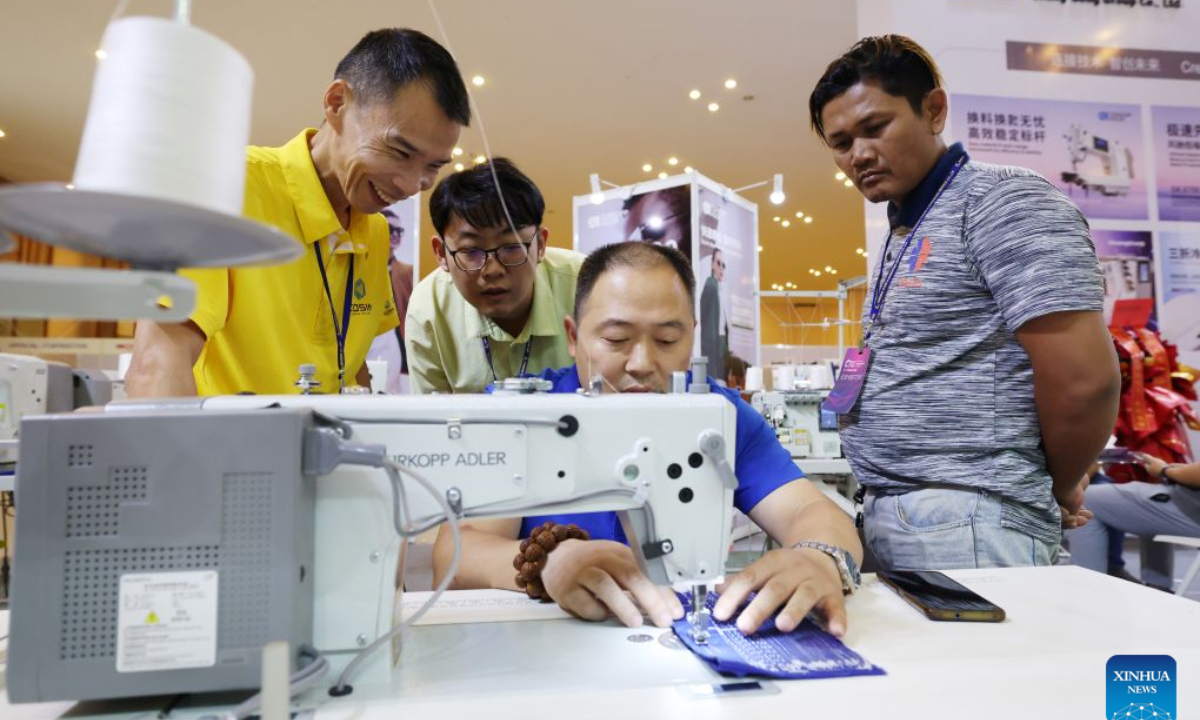
The four-day expo, which runs from Thursday to Sunday, features more than 200 local and international exhibitors.
A significant portion of these participants comprises Chinese companies across four core sectors: machinery and automation, textiles and garments, plastics and rubber, and printing and packaging.
Organized by Yorkers Trade & Marketing Service Co., Ltd. in collaboration with the Ministry of Industry, Science, Technology & Innovation, the expo provided a platform to showcase emerging industrial technologies, foster business connections and support the modernization of Cambodia's manufacturing sector.
According to official ministry data, Cambodia had 3,357 operational factories as of July 2026. These facilities employ over 1.35 million workers, more than 70 percent of whom are women.
Total factory investment in the kingdom reached approximately 28 billion U.S. dollars, a 29 percent increase compared to the same period in 2025. Additionally, industrial production during the first half of 2026 was valued at over 9.8 billion dollars, including roughly 7.3 billion dollars in goods manufactured for export.
Cambodian Minister of Industry, Science, Technology and Innovation Hem Vanndy urged Cambodian enterprises to embrace advanced technologies to boost productivity, improve quality, and sharpen their competitive edge.
"Artificial intelligence, production-line automation, robotics, digital technologies and smart manufacturing are increasingly determining the competitiveness of nations," he said during the expo's opening ceremony on Thursday.
"Cambodia cannot remain outside this transformation," Vanndy said. "We must embrace new technologies to increase productivity, reduce costs, improve product quality and strengthen the competitiveness of our enterprises."
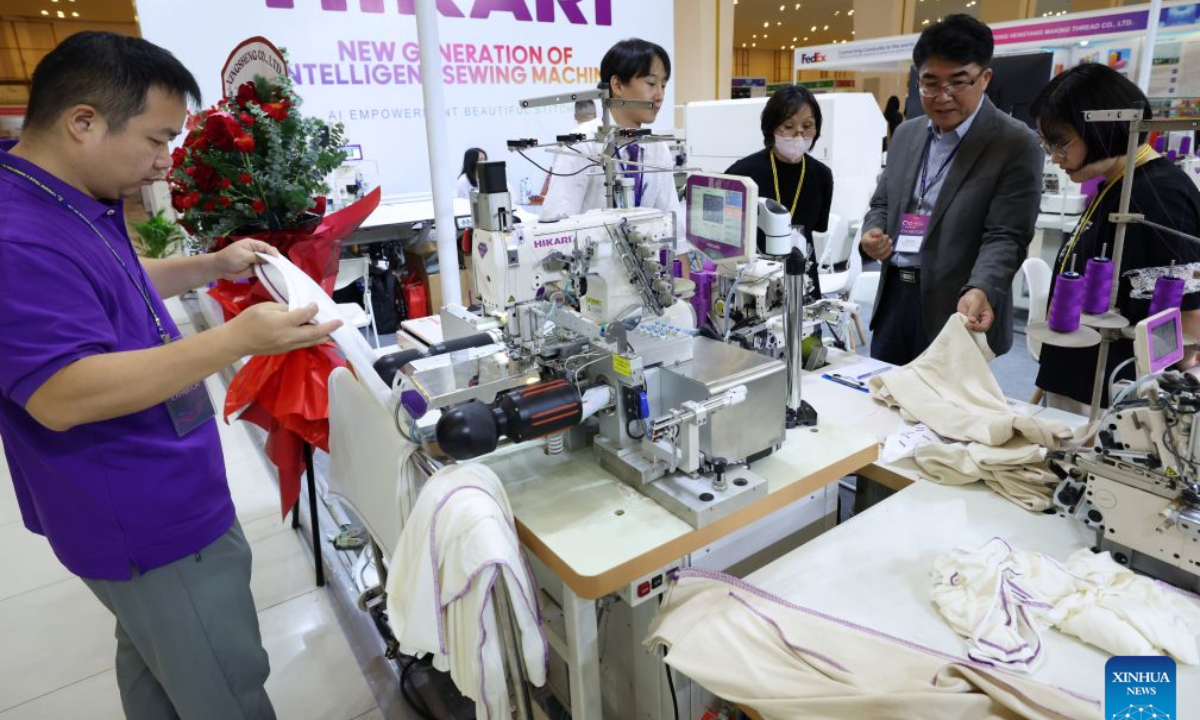
Chim Vinly, the expo's organizing staff member, said the exhibition plays a vital role in introducing innovative manufacturing technologies to Cambodia's garment sector, as attendees can explore a diverse range of advanced machinery designed to elevate production standards.
"Most exhibitors represent the textile and garment industries, with the majority being local and Chinese companies," he told Xinhua on Saturday.
"These advanced manufacturing tools have boosted productivity and modernized local production chains. In particular, they make work faster and more efficient," he added.
Vinly said the annual event plays a vital role in further expanding bilateral trade between China and Cambodia.
"Chinese investment is crucial to boosting Cambodia's economic growth and generating job opportunities for the local workforce," he said.
Bo Seyma, a mechanic at Kosin Sewing Machine Co., Ltd., which supplies Cambodian factories with equipment from the Shanghai-based Shang Gong Group, said the expo is vital for showcasing cutting-edge machinery to the local garment industry.
He said the Kosin company is promoting sewing, embroidery, button, and backstitching machines, along with other equipment, to factories in Cambodia.
"These industrial machines are in high demand, with numerous factories placing purchase orders with our company," he told Xinhua on Saturday.
Seyma said these advanced machines are high-quality and built to last.
"These machines accelerate production efficiency while effortlessly meeting customer demands," he said.
Thong Mengdavid, deputy director at the China-ASEAN Studies Center of the Cambodia University of Technology and Science, said that Cambodia, a country heavily dependent on textiles and garments, has seen its cooperation with China evolve from providing raw materials like fabrics and finished consumer goods toward technological cross-pollination.
This allows local Cambodian plant managers and entrepreneurs to evaluate high-grade machinery directly, he added.
"Integrating China's technology, machinery, and tools into Cambodian factories will address several challenges in the local economy, such as enhancing output per hour, reducing material waste caused by human error, and fostering skill development among the workforce," Mengdavid said.
。利润大幅增长。受国内人工智能需求增长和出口增势强劲双重拉动,数字产业盈利水平持续改善,实现利润总额1.79万亿元,同比增长19.3%,增速较上年同期加快10.3个百分点。

B | 收入利润率达8.6%,较上年同期提升0.7个百分点。二、重点区域、重点集群带动有力东部大省产业集聚态势显著。广东、江苏、北京、上海、浙江等数字产业收入前10大省(市)合计完成业务收入17.21万亿元,同比增长13.2%,占全国总量的83.1%,占比较上年同期提升0.3个百分点,对全国数字产业收入增长贡献率达87%。中部地区增速加快。

C | 中部地区实现数字产业收入2.86万亿元,同比增长28.3%,较上年同期加快18.7个百分点,高于全国14.7个百分点,其中安徽、湖北增速领先。

D | 产业集群蓬勃发展。截至目前,围绕集成电路、人工智能等数字产业领域,各地累计培育建设16个国家级先进制造业集群,依托集群培育一批骨干数字企业,这些企业成为推进技术创新、促进产业高端升级、塑造集群竞争优势的关键支撑。三、数字基础设施持续优化升级“双千兆”网络建设提质升级。截至6月底,5G基站达到510.2万个,具备千兆网络服务能力的10GPON端口达3286万个,5G-A商用网络加快建设应用,5G RedCap基站数达224.7万个,万兆光网在小区、工厂、园区等场景试点部署。算力基础设施体系加速完善。我国智能算力规模达2185 EFLOPS(FP16),同比增长177%,全国算力设施整体上架率达71.4%,建成万卡以上智算设施52个。融合应用效能持续释放。建成5G行业虚拟专网超8万个,5G、千兆光网应用已融入94个国民经济大类。

E | 全国“5G+工业互联网”在建项目超2.6万个,建成1260家分类分级、特色鲜明的5G工厂。四、数字制造业继续保持“量效”齐升生产保持较快增长。电子行业增加值同比增长14.8%,增速较一季度加快1.2个百分点,高于整体工业9.4个百分点。其中,电子器件、电子元件及专用材料、智能消费设备行业增速较快。效益显著提升。规模以上电子信息制造业实现营业收入12.15万亿元,同比增长17.8%;实现利润总额7036亿元,同比增长66%。其中,集成电路、计算机整机制造、电子专用材料行业的利润拉动作用最大。五、数字服务业保持稳步增长信息通信业总体运行平稳,按上年不变单价计算的电信业务总量同比增长8.3%,增速较上年同期提高0.6个百分点。软件和信息技术服务业业务收入同比增长9.5%,其中,软件产品收入同比增长6.9%,信息技术服务收入同比增长10.4%。规模以上互联网企业业务收入同比增长10.1%,增速较上年同期加快7个百分点,利润总额同比增长16.6%。
Current article:http://rdesg.loukachunwenghongchuikui.shop/aqy98/bipsrvv.html
Published on:18:48:42


